
The Summer Quarter: While the Sun Shines
Summer has arrived at Strete Farm with a sense of abundance. After the anxious dry spell of May and the welcome relief of June rain, the land is at full tilt. Livestock are thriving, research is underway, and the walled gardens have some surprising new tenants. This is the season when everything planted, bred and planned for begins to show its hand.
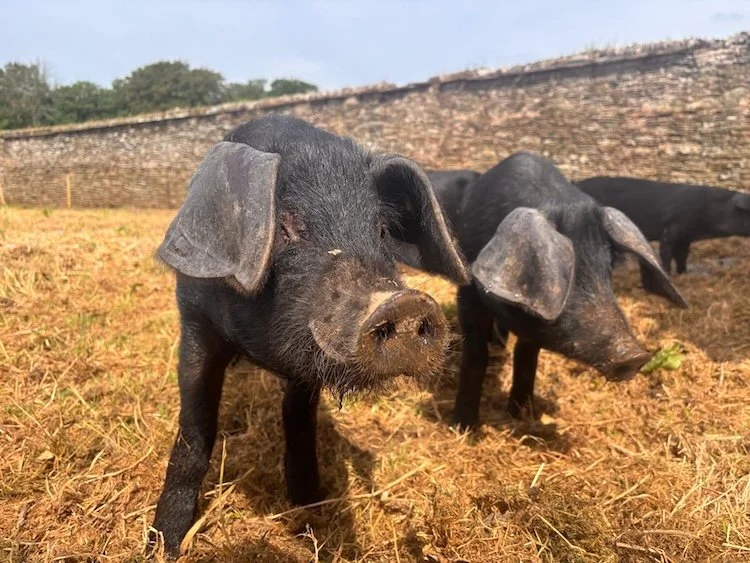
Pigs take over the estate walled garden
The weather report
If weather is a national obsession, then for farmers it’s a natural one. Unpredictable weather directly affects the wellbeing of our fields and livestock. With our climate in breakdown, patterns of wind, rain and temperature have become more erratic, and we have to be resilient and highly adaptive in our decision-making. We begin each edition of Four Quarters with a weather report to chronicle these changes. As seasons and years pass, we hope to look back on the storms we have faced and weathered.
April 2026 was warm and generous, with good sunshine and occasional rain. May turned dry – unusually so – and we watched the grass carefully, concerned about what a prolonged dry spell can do to grazing supply. June has arrived wetter, and the whole farm has exhaled.
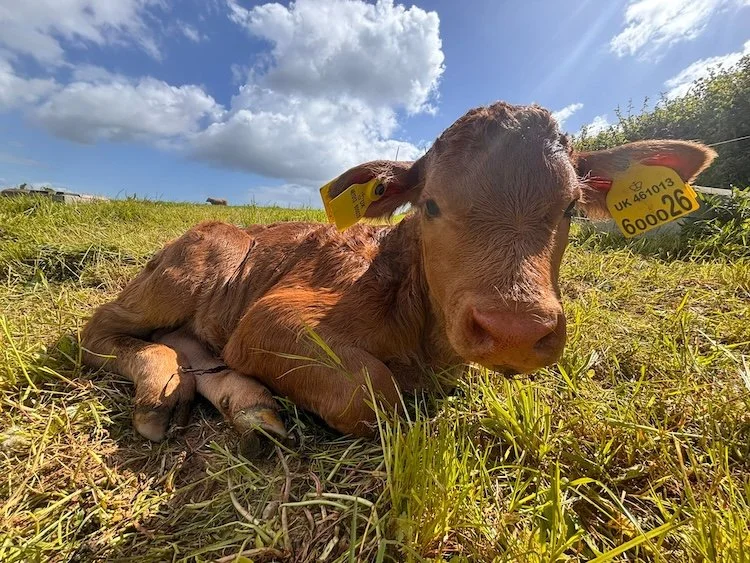
A newborn calf enjoying the late spring sunshine at Strete
Farming a season ahead
One way we’ve responded to dry periods is by investing in two new water bowsers: a 1,000-litre and a 2,000-litre tank, each trailered with its own drinking trough. These give us flexibility, enabling us to access areas of the estate where water availability has previously limited grazing opportunities.
Enjoying this month’s rain, the herbal leys we drilled last autumn are strong and lush, ready for our young herds to graze later in the summer. Hay and silage cuts are planned for late June and early July, securing the forage that ewes and cows will depend on when the growing season ends.
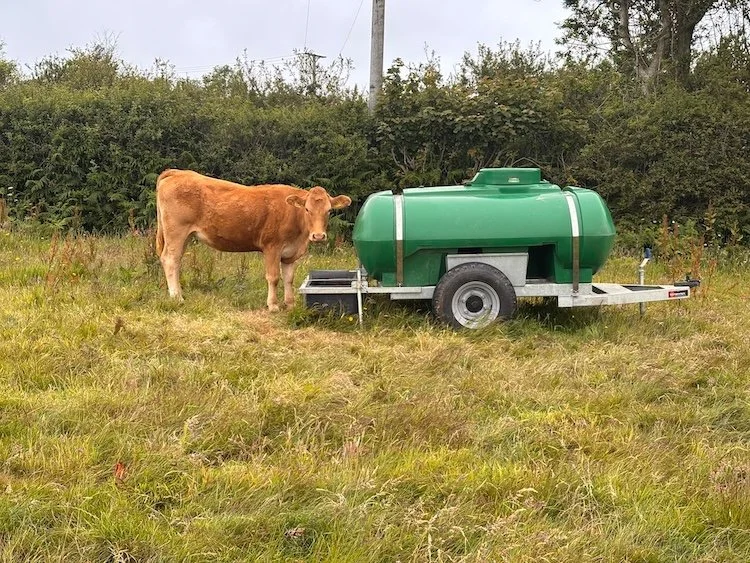
Our first customer at the water bowser
A flourishing flock
After five weeks of lambing and a season blessed with kind weather, 520 Romney ewes and 846 lambs are flourishing on Strete’s Devon grass. In farming, a high lambing percentage is a sign of flock health and nutritional management. We’re delighted with our score (162%), but what it doesn’t show is how few interventions were needed. Nothing beats seeing healthy ewes lambing on their own, lambs able to get up and feed unassisted, and the spring flock enjoying their living landscape.
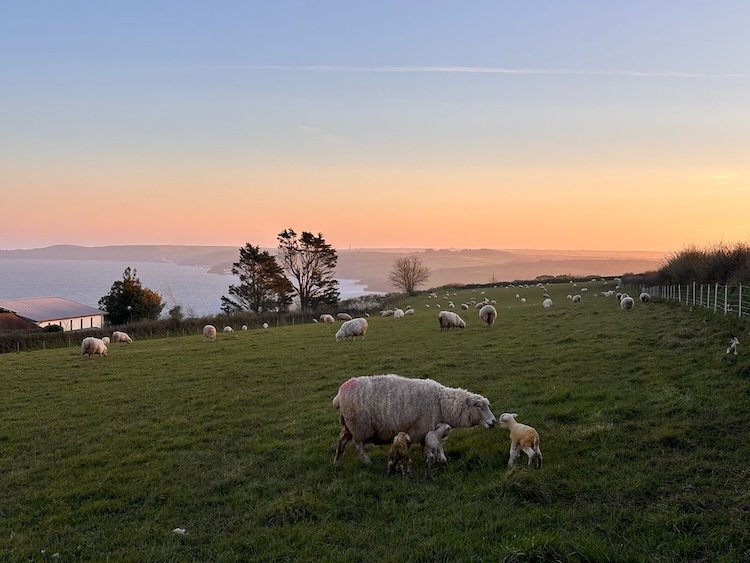
Lambs and ewes with a view this summer
Calving continues
Our South Devon cows and calves are settling into the rhythm of good grazing. During the calving period, we move the herd every three days, which is good for their health and for the plants they graze. Twenty-three of our thirty cows and heifers have now calved, and are doing what South Devons do best: munching on natural pastures and lowing contentedly.
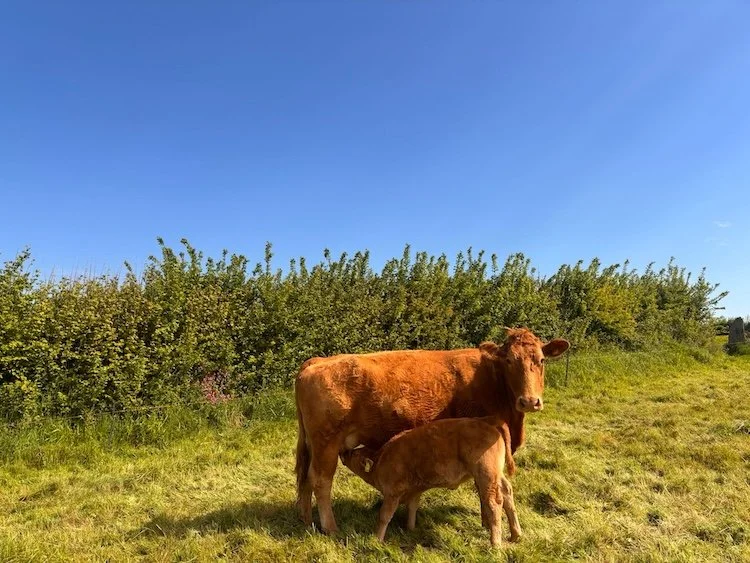
A cow and her calf enjoying natural grazing
Strengthening the herd
A new pedigree Aberdeen Angus bull has joined us from a high-health-status herd in Surrey. Young and excitable, well-grown and already showing good potential. Crossed with our South Devon heifers, he’ll produce calves with the vigorous build of the South Devon and the exceptional meat Angus is renowned for. Our heifers have all passed pelvic scoring, confirming their suitability for safe, unassisted calving, and are on track to calve at two years old.
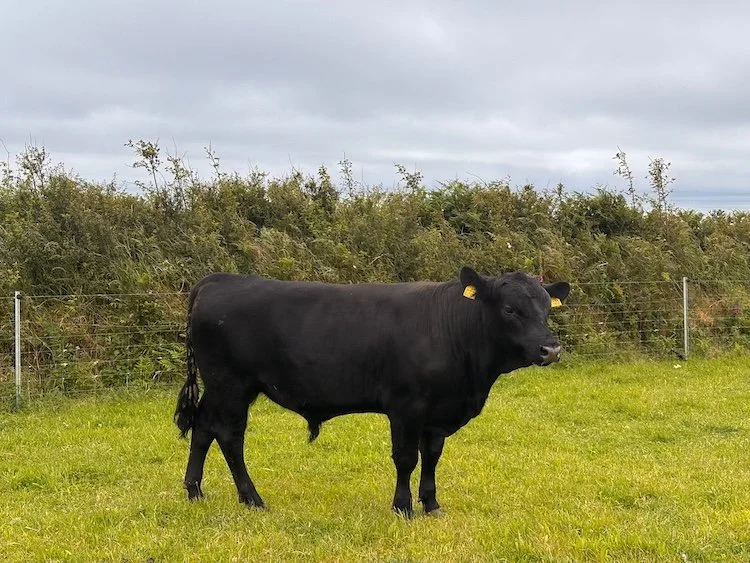
Our splendid new Aberdeen Angus
Meet the Large Blacks
In the walled gardens near the manor house, six Large Black pigs, sourced from a local farm in Chillingford, have settled in well. Hungry, chatty and industrious, they’re cultivating the ground they rootle, returning organic matter into the soil and preparing the area for future productive gardens. Once they have completed their work here, they’ll move into the woods where they’ll enjoy natural forage and experiences. Descendants of wild boar, pigs are woodland creatures and play an important role in the ecosystem, hindering dominant bracken and brambles, breaking up the ground to receive seeds, returning nutrients to the soil and generally encouraging balance and diversity.
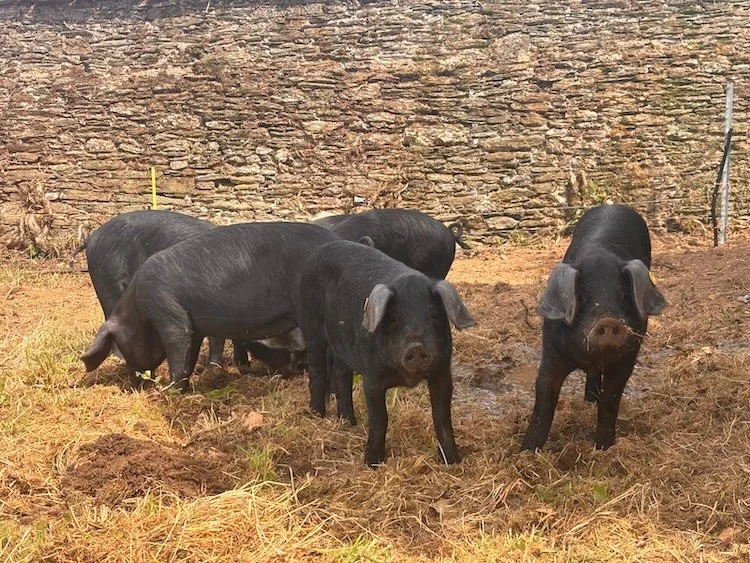
Our Large Black pigs rootling in the walled garden
Cutting back and making room
Following the pigs’ excellent example, we’ve begun topping some of the steeper ground across the estate, cutting back bracken and encouraging the growth of herbs and grasses. Come winter, the herd will be out whatever the weather, their grazing continuing the work the topper began, gradually improving the richness of habitat across the hillside.
Healing the soil with Plymouth University and the Soil Association
Soil compaction, the legacy of many years of conventional farming and heavy machinery, remains one of the most significant challenges to the health of our land. In partnership with Plymouth University and the Soil Association, we are developing a research project to address it, investigating biological, mechanical and mineral approaches: earthworms and mycorrhizal fungi, targeted cultivation, and remediations such as lime, gypsum, and biochar. The findings will shape how we, and perhaps others, farm in the future.
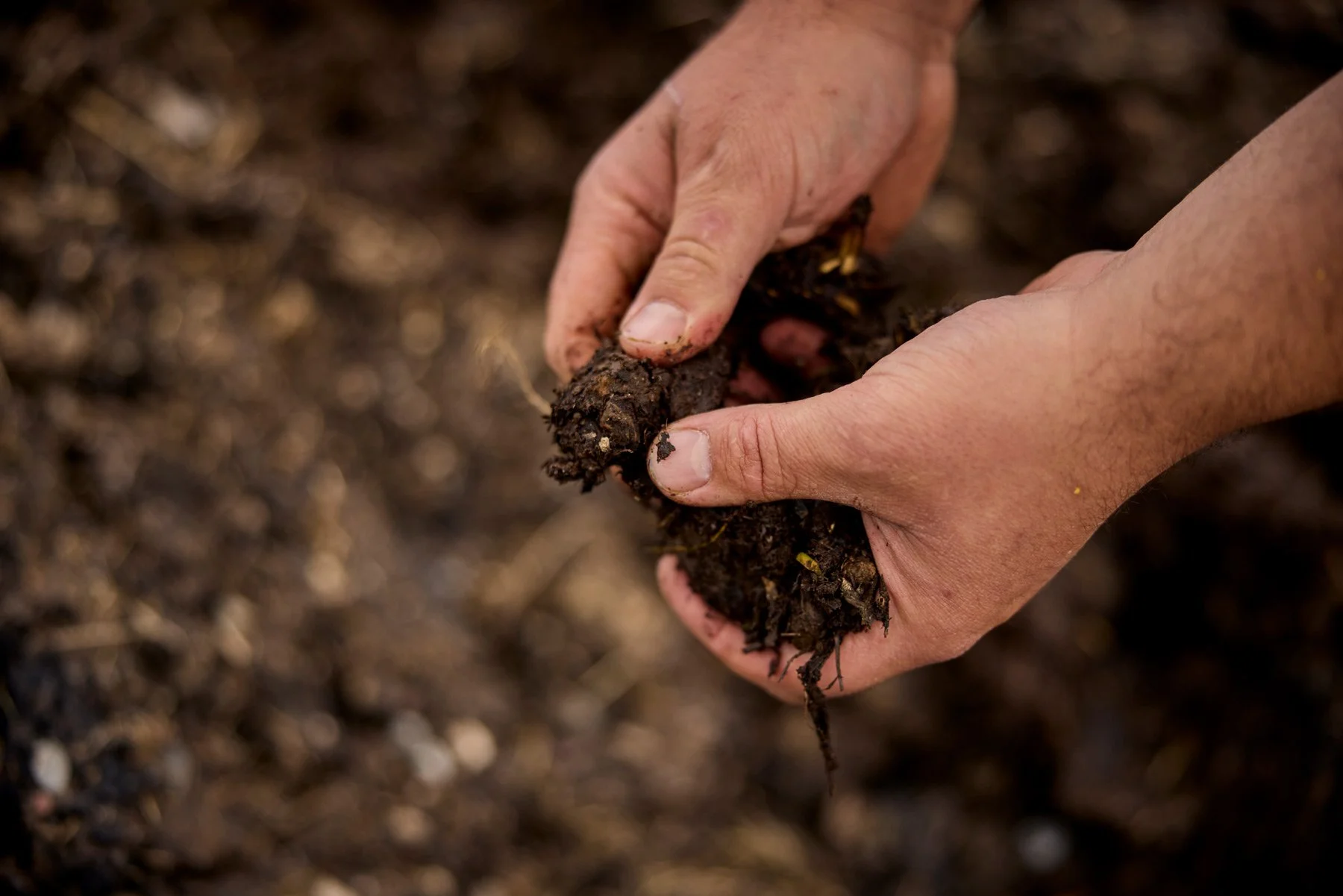
Assessing soil quality
Until Autumn
As the longest days pass and summer settles in, the work of the farm turns quietly toward autumn. Hay and silage will be cut and stored, young stock will move to new pastures, and the steep hillsides will be prepared for winter grazing. At Strete, the season ahead is always already underway.
Thank you for reading and for being part of this journey. Four Quarters exists to share the reality of farming this land: the setbacks as well as the successes, the questions as well as the answers.
We'd love to hear from you.