The Autumn Quarter: Reflection, Resilience and Feasts
Today marks the Autumn Equinox, when day and night are in balance. It’s a time to reflect on the productive year and consider changes for spring. Drought resilience is on many farmers’ minds, as it is on ours. As we assess the health of our soil, our pastures, our animals and our ability to capture both carbon and water, surely the solution is to work with nature rather than against it?
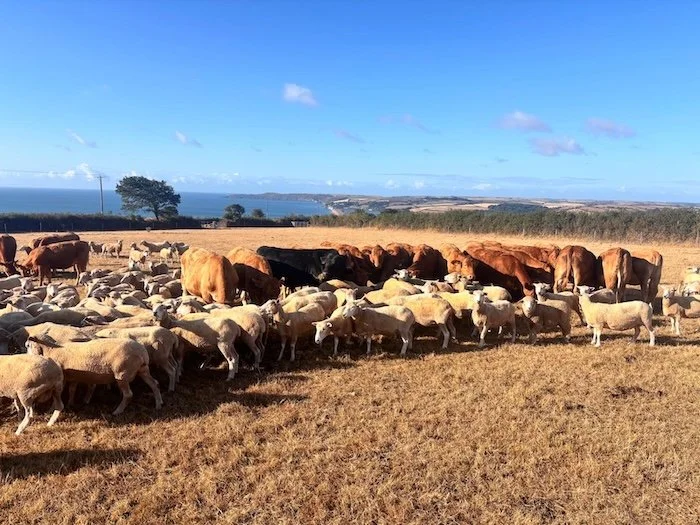
Strete Farm during the 2026 summer drought
The weather report
This quarter brought an unusually prolonged dry spell, with around two and a half months with barely a drop of rain. Strete’s average summer rainfall is 175mm, so the impact was significant. The fields nearer the coast, particularly around Cox’s Farm, were affected most. With less shelter and greater wind exposure, they dried out rapidly.
Grass growth effectively stopped, with many fields turning yellow and white. Instead of grazing green pastures, our animals ate roughly 15 tonnes of hay and 10 tonnes of the silage conserved for the winter.
We were not alone, of course; fellow farmers on our Precision Grazing discussion group told similar stories. The recent rain has helped us all to bounce back. 40mm in two weeks has helped the grass grow rapidly again, but we need to take stock and assess every detail of our water and pasture management, from hay cutting height to sward density and diversity.
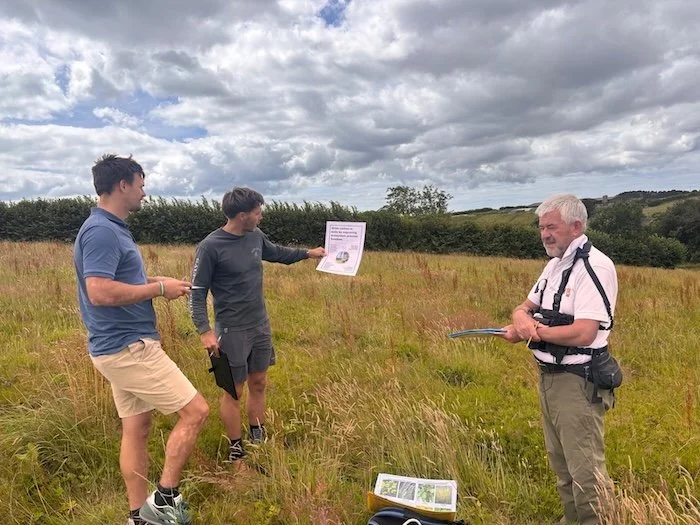
Assessing Strete Farm’s ecological health
Organic status and tracking our progress
We were heartened to read that the Soil Association’s Organic September is growing in strength, with 83% of British households buying organic products this year. On the 15th of September, Soil Association inspectors visited Strete Farm for Part One of our own Organic Certification Inspection. They assessed our land, livestock and systems such as Herdwatch, which tracks everything from calving and medicines to grazing rotations. We were praised for our organisation and await the outcome. In the meantime, we continue to farm organically. Certification takes time, but we’ve always followed our principles.
This month we’re meeting with ecologists from the University of Plymouth to assess Strete’s soil quality. This will provide a baseline to build on. We’ll also be welcoming Downforce, who are using Strete Farm as a pilot site for their technology, which uses satellite images to measure soil organic carbon. We hope this will help us to track ecosystem resilience and our sustainability progress over time.
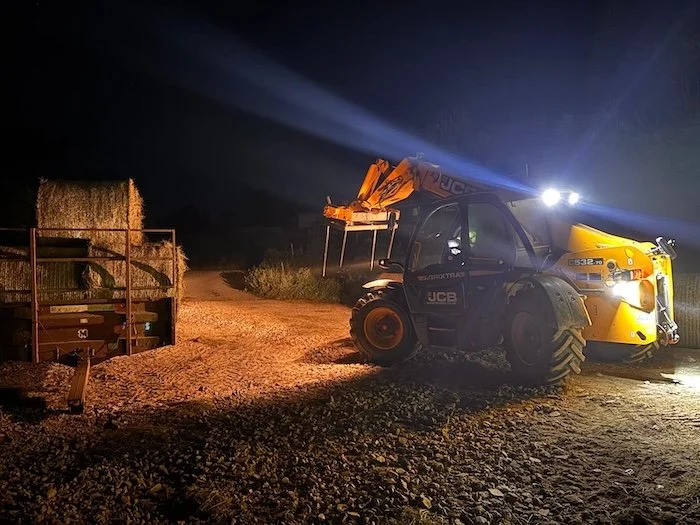
Haymaking at Strete Farm, summer 2026
Feeding the flock - and herd
Good spring conditions meant we made around 130 tonnes of silage and 100 tonnes of hay this year. The dry weather did not affect the quality or quantity of the forage, as we harvested before the drought took hold. Having plenty of conserved forage has been vital this year to help our animals through the drought. We’ll set aside extra for winter too, in case conditions are difficult, and sell any surplus to help cover contracting costs.
Out-wintering involves regular livestock moves to prevent poaching, with round bales rolled out across fields to spread animal impact and reduce damage to the ground. We also make extensive use of electric fencing to manage where and for how long the animals graze.
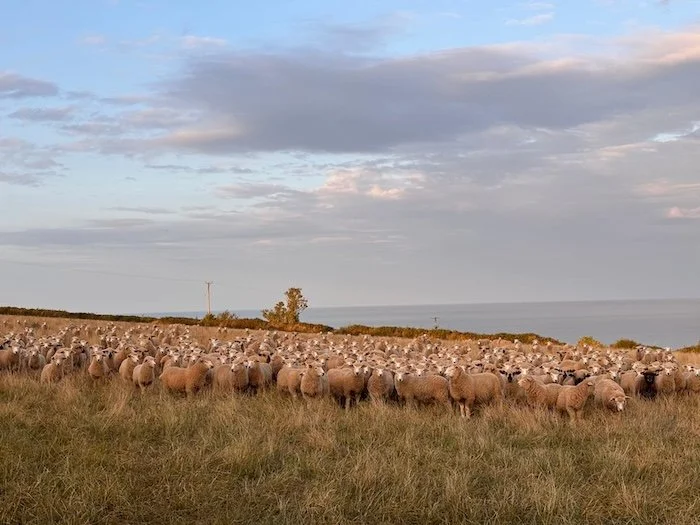
Hogget aged sheep grazing on the farm this summer
Rotational grazing and helping hedgerows
This year we’ve installed a mind-bending 21km of new fencing to help us manage sheep and cattle more precisely. Rotational grazing benefits soil and pasture, which in turn supports our animals' health and the nutritional density of our produce.
We're also proposing to plant around 1.5km of new hedgerow with a diverse mixture of native species, including hawthorn and blackthorn. While the fencing will help protect our existing hedgerow habitats, the new hedges will create more field divisions and wildlife corridors, provide shade for livestock, help with water retention and increase biodiversity across the farm.
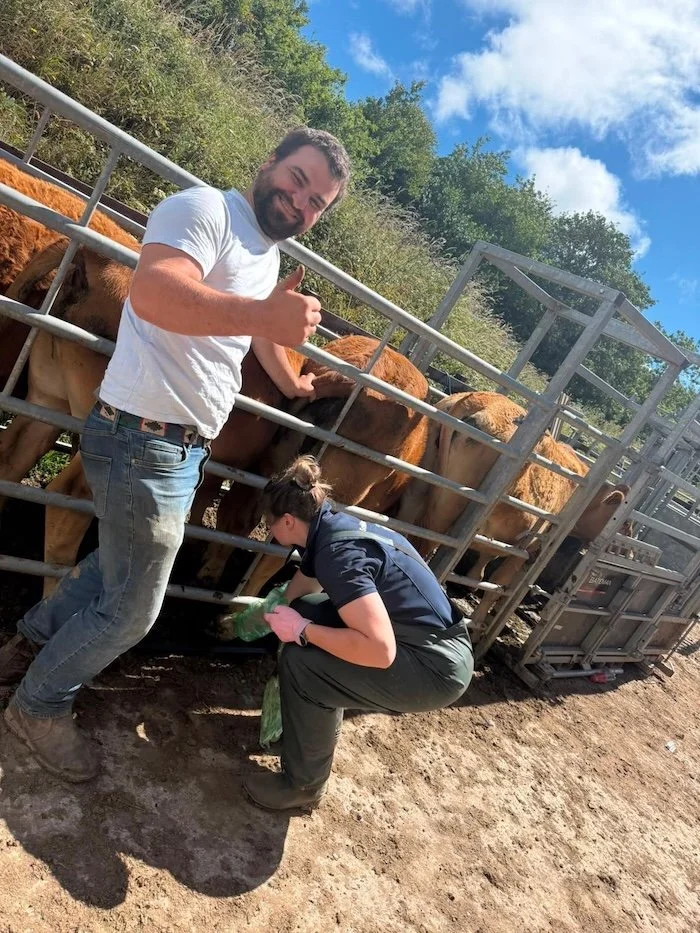
Our healthy herd gets the all-clear, July 2026
Reducing the risk of TB
The whole herd was tested for bovine tuberculosis in early July and given a clean bill of health. The TB test involves measuring the skin thickness of each animal’s neck before injecting a small amount of TB-related substance. If there is any sign of reaction when the skin is measured 72 hours later, the animal may be classified as positive and will be subject to further testing.
We currently test every six months, guided by local TB status, and take biosecurity measures to reduce the risk of TB spread, such as avoiding contact with neighbouring cattle and quarantining any new stock that comes onto the farm.
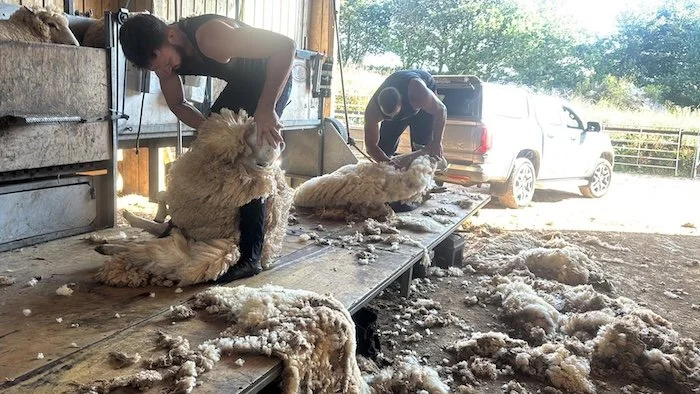
Sheep shearing at Strete Farm this summer
Celebrity sheep shearing and from lamb to hogget
Our 400-odd ewes were in safe hands this summer with world-record-holding sheep shearer Matt Smith. The shearing was completed over two separate half-days, with the hot weather making timing particularly important. We had to work around the heat to minimise stress on the sheep. The flock produced around 1.5 tonnes of wool. We will use this wonderful natural material in other farm enterprises and sell any surplus through British Wool.
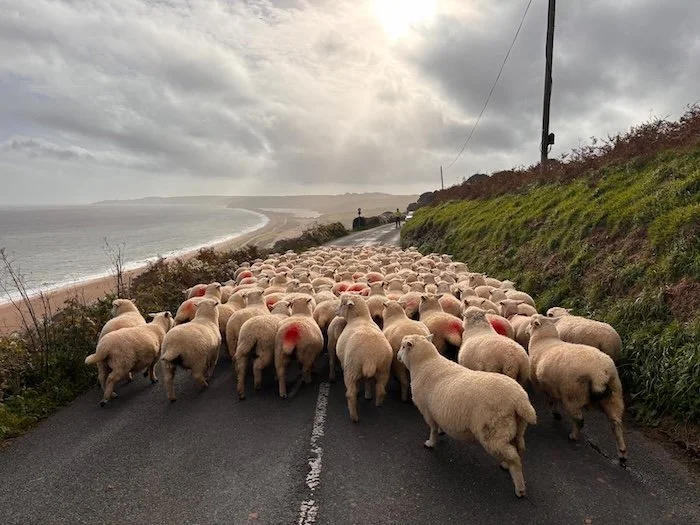
We weaned around 400 lambs this summer at around 16 weeks, with an average weight of 28kg. After weaning, we rotationally graze the lambs around the farm. This summer’s lambs have made slow progress because of the lack of fresh green pasture. Our aim is to grow them slowly and sell them as hoggets in spring. Hoggets, generally classed as between one and two years old, have a richer, deeper taste than lamb and a sweeter, more succulent flavour than mutton. Our aim is always to provide our animals with the best possible quality of life, and switching from lamb to hogget may be one way to do this.
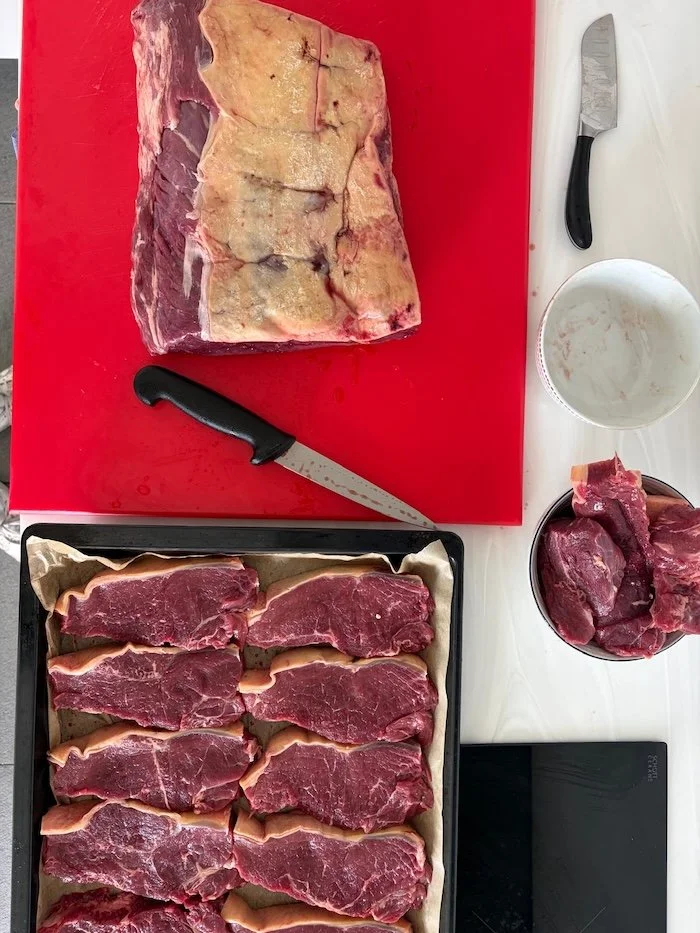
Customer photo of Strete Farm steaks
“The steaks were excellent”
It’s been a joy to sell our beef directly to local customers, reducing food miles and allowing us to serve our community with a high-quality product and a more sustainable way of earning for the farm.
Altogether, this is a much more satisfying approach, and customer feedback has been very positive, with comments that the steaks are “really tender and tasty,” generous in size, and fairly priced.
If you haven’t tried our meat yet, we hope you will soon.
Until Winter
Thank you for reading and joining us on our regenerative journey. If you have any suggestions or questions, we’d love to hear from you.